Monography


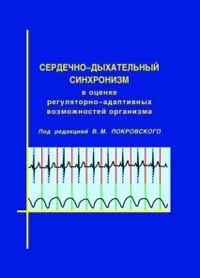
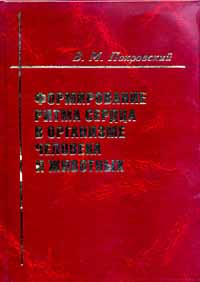
Обложка монографии


УДК 612.172.2-092
ББК 28.903
P48

Vladimir M. Pokrovskii. HEART RHYTHM FORMATION IN THE HUMAN AND ANIMAL ORGANISM. - Krasnodar Издательство Kuban-Kniga, 2007. — 144 p., pics.
ISBN 978-5-91053-009-0

The system reveals scientific facts showing that the heart rhythm in an organism is formed by the hierarchy of mechanisms including brain and intracardiac levels. In an organism the heart rhythm is formed in brain signals of which get to the heart along the vagus nerves in the form of bursts of impulses. The heart reproduces the rhythm of theses signals. Under such conditions the sinoatrial node acts as a latent pacemaker. The integration of two levels of rhythmogenesis provides reliability and functional perfection of the cardiac rhythm generation system. The central generator provides the heart's adaptive reactions under normal conditions. The intracardiac generator assures the pump function of the heart when the central nervous system is in the stage of deep inhibition.


Vladimir M. Pokrovskii

HEART RHYTHM FORMATION IN THE HUMAN AND ANIMAL ORGANISM

CONTENTS

Preface

Introduction

Chapter 1. Effects of burst stimulation of vagus nerve

1.1.Revealing of phenomena of synchronization of heart rate with burst stimulation frequency of vagus

1.2 Comparison of burst stimulation effects of vagus nerves in cats

1.3. Synchronization of the heartbeats frequency with burst stimulation frequency of vagus in kittens

1.4. Role of activation place of the effector structures of vagus nerve in realization of vagal and cardiac rhythms

1.5. Role of sympathetic department of vegetative nervous system in realization of synchronization effect of heartbeats frequency with the frequency of vagus nerve burst stimulation

1.5.1. Synchronization of heartbeats frequency with the vagus nerve burst stimulation frequency at simultaneous stimulation of sympathetic nerve

1.5.2. Synchronization of heartbeats frequency with the vagus nerve burst stimulation frequency at activation of sympathetic nervous system

1.5.3. Synchronization of heartbeats frequency with the vagus nerve burst stimulation frequency at oppression of sympathetic nervous system

1.6. Synchronization of heartbeats frequency with the vagus nerve burst stimulation frequency in different animals

1.6.1. Synchronization of heartbeats frequency with the vagus nerve burst stimulation frequency in rabbits

1.6.2. Synchronization of heartbeats frequency with the vagus nerve burst stimulation frequency in dogs

1.6.3. Synchronization of heartbeats frequency with the vagus nerve burst stimulation frequency in monkeys

1.6.4. Synchronization of heartbeats frequency with the vagus nerve burst stimulation frequency in rats

1.6.5. Synchronization of heartbeats frequency with the vagus nerve burst stimulation frequency in diving mammals and birds

1.7. Conclusion to chapter I

References to chapter I

Chapter 2.Reproduction by heart the rhythm of signals, formed in the central nervous system

2.1. Methods of obtaining, and parameters of cardiorespiratory synchronism

2.2. Cardiorespiratory synchronism in humans: Its dependence on age and gender

2.3. Analysis of cardiorespiratory synchronism mechanisms

2.4. Conclusion to chapter 2

References to chapter 2

Chapter 3. Electrophysiological events in the sinoatrial node of the heart at reproduction of rhythm of signals, coming via vagus nerves

3.1.Methods of computer mapping of origin and dynamics of spreading of excitation initiation area in the sinoatrial area of the heart

3.1.1. Mapping of the sinoatrial node area at potentials averting from epicardial surface of node by electrodes, fixed on electrode matrix

3.1.2. Mapping of the sinoatrial node area at potentials averting from epicardial surface of node by electrodes, fixed on electrode catheter

3.1.3. Mapping of the sinoatrial node area at potentials averting from epicardial surface of node by electrode catheter

3.1.4. Synchronous monitoring of initial excitation area in the sinoatrial area and cardiointervalogramm

3.2. Electrophysiological events in the sinoatrial node of the heart at reproduction of stimulation rhythm of vagus nerves by bursts of impulses

3.2.1.Electrophysiological events in the sinoatrial node of the heart at vagal and cardiac synchronization

3.2.2.Analysis of reasons of increase of space of initial excitation area at reproduction by heart the rhythm of signals, coming via vagus nerves

3.2.2.1. Vagus nerve stimulation in common periodical regime

3.2.2.2. Electrophysiological manifestations in the sinoatrial node at burst stimulation outside synchronization range

3.2.2.3.Electrophysiological manifestations in the sinoatrial node at vagus nerve cutting below place of stimulation

3.2.3. Role of the space of excitation initiation in sinoatrial node in realization of vagal cardiac synchronism

3.3. Electrophysiological events in sinoatrial node of the heart at reproduction of rhythm of the signals, formed in the central nervous system

3.3.1. Excitation initiation area in sinoatrial node of the dog's heart at narcosis and within 4 days after operation

3.3.2. Excitation initiation area in sinoatrial node of the heart of human at narcosis and at recovering of the functional state in the early postoperative period

3.4. Dynamics of the excitation initiation area in sinoatrial node and functional state of an organism

3.4.1.Dynamics of the space of initial excitation area in sinoatrial node and functional state of an animal

3.4.2. Dynamics of the space of initial excitation area in sinoatrial node and functional state of the patients after cardiac surgery

3.5. Dynamics of the space of initial excitation area and heart rate variability

3.5.1. Dynamics of the space of initial excitation area and heart rate variability in animals

3.5.2. Dynamics of the spacee of initial excitation area and heart rate variability in patients after cardiac surgery

3.6. Excitation initiation area in sinoatrial node and cardiorespiratory synchronism

3.6.1. Cardiorespiratory synchronism and excitation initiation area in sinoatrial node of the dog's heart

3.6.2. Cardiorespiratory synchronism and excitation initiation area in sinoatrial node in patients after cardiac surgery

3.7. Conclusion to chapter 3

References to chapter 3

Chapter 4. Dominance of the brain level of rhythmogenesis in a whole organism

4.1.Technique of "functional cutting" of the vagus nerves

4.2. Effects of "functional cutting" of the vagus nerves

4.3.Conclusion to chapter 4

References to chapter 4

Chapter 5. Conception of hierarchical organization of the heart rhythm formation in the human and animal organism (conclusion)

References to chapter 5

Afterwards